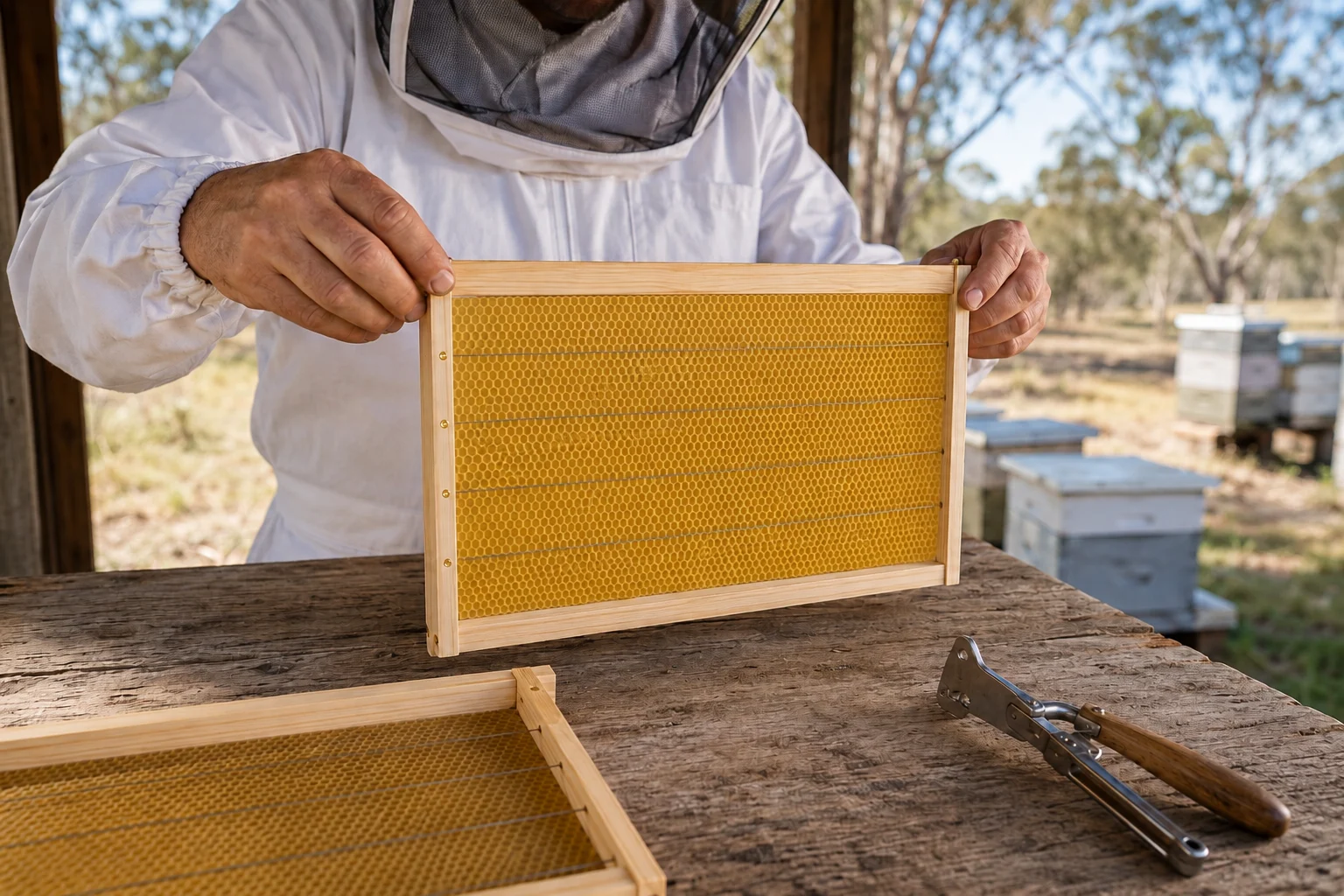
Choosing the right beehive frames can be confusing when you are starting out. Should you use timber or plastic? Do wired frames need wax foundation? Which frame depth fits your boxes?
Ready-wired beehive frames remove much of the time-consuming preparation. The timber frame is already assembled and fitted with wire, leaving you to add the appropriate wax foundation before placing it in the hive.
Here are answers to seven common questions about choosing and using wired beehive frames.
1. What is an assembled and wired beehive frame?
An assembled wired frame is a timber beehive frame that has already been constructed and fitted with supporting wire.
Penders’ Full Depth assembled wired frames are made from premium-grade New Zealand pine and are glued and nailed. They include brass eyelets and stainless-steel wire.
The eyelets protect the timber where the wire passes through the sidebars, while the tensioned wire provides support for beeswax foundation.
Assembled wired frames save beekeepers from having to:
- Assemble and square each timber frame
- Glue and nail the frame components
- Insert brass eyelets
- Thread and tension the frame wire
This can represent a considerable time saving when preparing an entire hive or replacing frames across several colonies.
2. Why use wired frames?
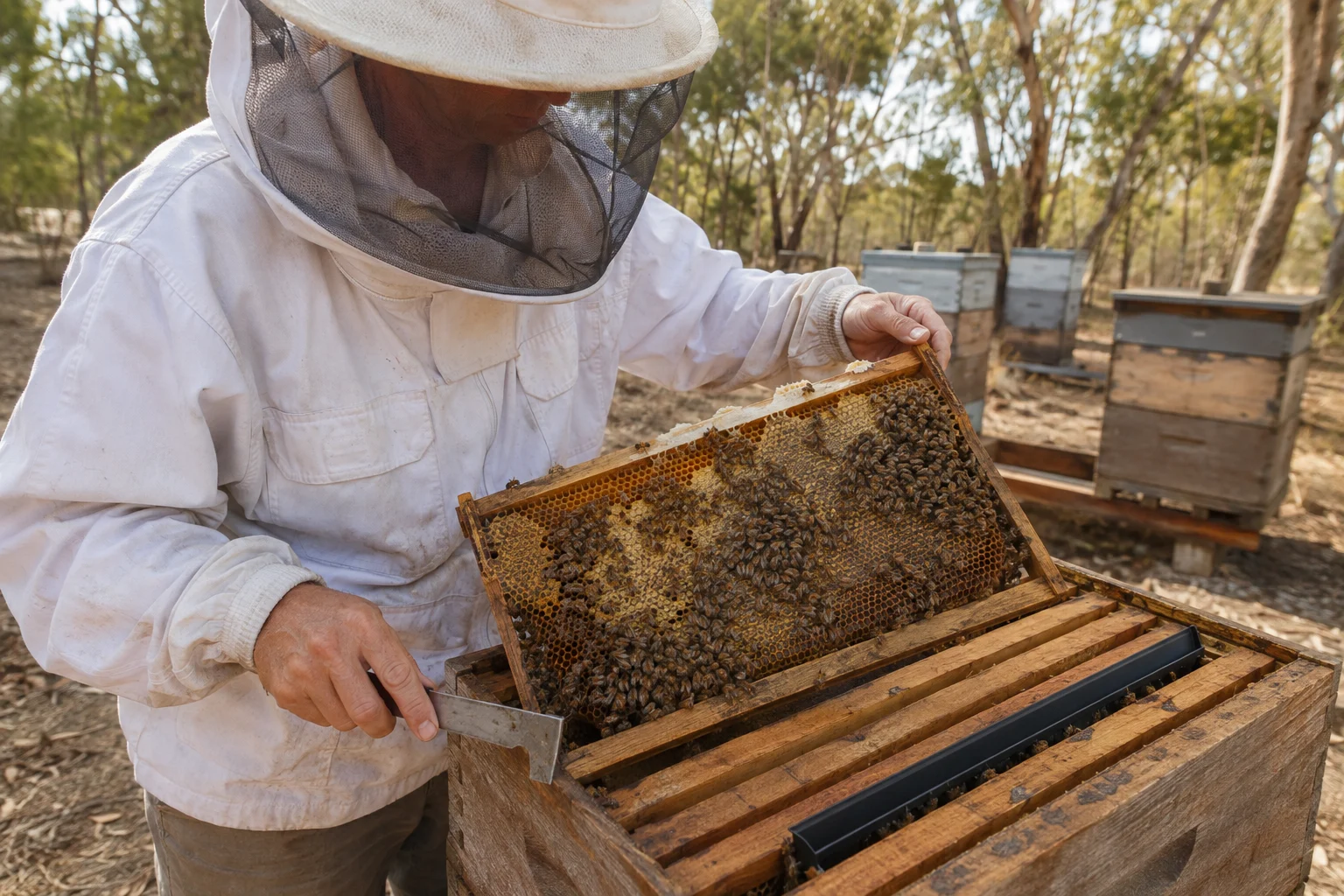
Beeswax foundation is a relatively thin sheet of wax. Once correctly embedded, the frame wire supports the foundation as the bees draw it into comb.
This additional support is particularly useful when frames become heavy with brood, pollen or honey. It also helps the comb withstand handling and the forces created during centrifugal honey extraction.
Wired frames can help beekeepers achieve:
- Straighter, more evenly positioned comb
- Better support for beeswax foundation
- Stronger comb during hive inspections
- Greater stability during honey extraction
- Replaceable foundation within a reusable timber frame
Agriculture Victoria includes frames, beeswax comb foundation and frame wire among the basic equipment required when establishing a Langstroth hive. Its beginner guide specifies 16 frames and foundation sheets for a two-box eight-frame hive or 20 for a two-box ten-frame hive.
3. Are assembled wired frames ready to place directly into the hive?
Not usually. An assembled and wired frame is constructed and wired, but it generally still requires a sheet of beeswax foundation.
This differs from a frame described as assembled, wired and waxed, which should already contain foundation. Always read the individual product description so you know exactly what is included.
Before putting an assembled wired frame into your hive:
- Confirm that the frame size matches your hive box.
- Check that the frame is square and undamaged.
- Make sure the wire is firm and evenly tensioned.
- Insert the correctly sized wax foundation.
- Embed the wire into the foundation.
- Allow the wax to cool and check that it is secure.
Penders supplies beeswax foundation in Full Depth, WSP and Ideal sizes.
4. How is wax foundation attached to a wired frame?
The foundation sheet is positioned within the frame and the wire is gently embedded into the wax. This can be done with an electric embedder or a heated spur-wheel embedder.
The wire should sit securely within the foundation without cutting completely through it. Overheating can melt or distort the wax, while insufficient embedding may leave sections of wire exposed.
Before embedding the foundation, check the wire tension. It should be firm without pulling the frame out of square. If an older frame has loose wire, a frame wire crimper can create small waves in the wire, increasing its effective tension.
Beekeepers wiring their own frames can also purchase stainless-steel or galvanised frame wire.
5. Which frame size do I need: Full Depth, WSP or Ideal?
The frame depth must match the depth of the hive box. Using a shallow frame in a deeper box leaves open space beneath it, where bees may build unwanted comb.
Penders supplies three commonly used Langstroth frame depths:
Full Depth frames
Full Depth frames are commonly used in brood boxes and can also be used in honey supers. They provide substantial comb area but become heavy when filled with honey.
View Full Depth assembled wired frames.
WSP frames
WSP frames are shallower than Full Depth frames. They are often selected for honey supers because a filled WSP box is lighter to lift than a Full Depth box.
Ideal frames
Ideal frames are shallower again and can be a practical option for beekeepers who want lighter honey supers.
View Ideal assembled wired frames.
Your hive may contain Full Depth brood boxes with WSP or Ideal honey supers, but each box must contain frames of the corresponding depth.
6. Are timber wired frames better than plastic frames?
Neither option is best for every beekeeper. The decision depends on your preferred foundation, available preparation time and hive-management methods.
Timber wired frames
Potential advantages include:
- Suitable for traditional beeswax foundation
- Individual components can be repaired or replaced
- Old foundation can be removed and renewed
- Timber and wax are familiar materials within conventional Australian beekeeping
They do, however, require foundation to be installed and occasionally need wire maintenance.
Plastic frames
Plastic frames are rigid and generally require less initial assembly. Some include an integrated foundation pattern and may be sold ready to place in the hive after any required wax coating.
Plastic frames cannot be rewired like timber frames, and their acceptance by bees can depend on the design and the amount of beeswax applied to the plastic surface.
For hobby beekeepers who prefer timber frames with natural beeswax foundation, assembled wired frames offer a useful balance between traditional materials and convenient preparation.
7. When should wired frames be repaired or replaced?
Inspect your frames whenever foundation or old comb is removed. Pay particular attention to the joints, eyelets and wire.
A wired frame may need maintenance if:
- The wire has become loose
- Sections of wire are broken or badly corroded
- Eyelets are missing or damaged
- The frame is twisted or no longer square
- Timber joints have loosened
- The foundation is not held securely
Loose but otherwise sound wire may be tightened with a crimping tool. Broken wire can be removed and replaced. A frame that is badly distorted, cracked or unable to hold its shape should generally be replaced.
Regular frame maintenance makes foundation installation easier and reduces the chance of equipment failing during an inspection or honey extraction.
Save Time Preparing Your Beehives
Assembled wired beehive frames provide the strength of timber, support for beeswax foundation and the convenience of professional assembly. They are particularly useful when preparing multiple boxes, expanding an apiary or replacing older comb before the main beekeeping season.
Browse Penders’ hive frames and components or contact the team if you are uncertain which frame and foundation size matches your equipment.