
Small Hive Beetle (SHB) (Aethina tumida) is now a well-established pest across much of Australia and remains one of the most persistent challenges for beekeepers. While strong colonies can often keep beetle numbers in check, weak or stressed hives are highly vulnerable, particularly during warm and humid conditions.
Effective SHB control relies on prevention, good hive management, and targeted trapping, rather than reacting once an infestation has taken hold.
Understanding the Small Hive Beetle
Adult beetles are dark brown to black and about one-third the size of a worker bee. They enter hives to lay eggs in cracks and crevices. Once the larvae hatch, they tunnel through comb, ferment honey, and can quickly cause hive collapse if left unmanaged.
SHB pressure is highest when:
- Colonies are weak or queenless
- Hives are over-supered
- Weather is warm and humid
- Apiaries are located in shaded or damp areas
- Strong Colonies Are the First Line of Defence
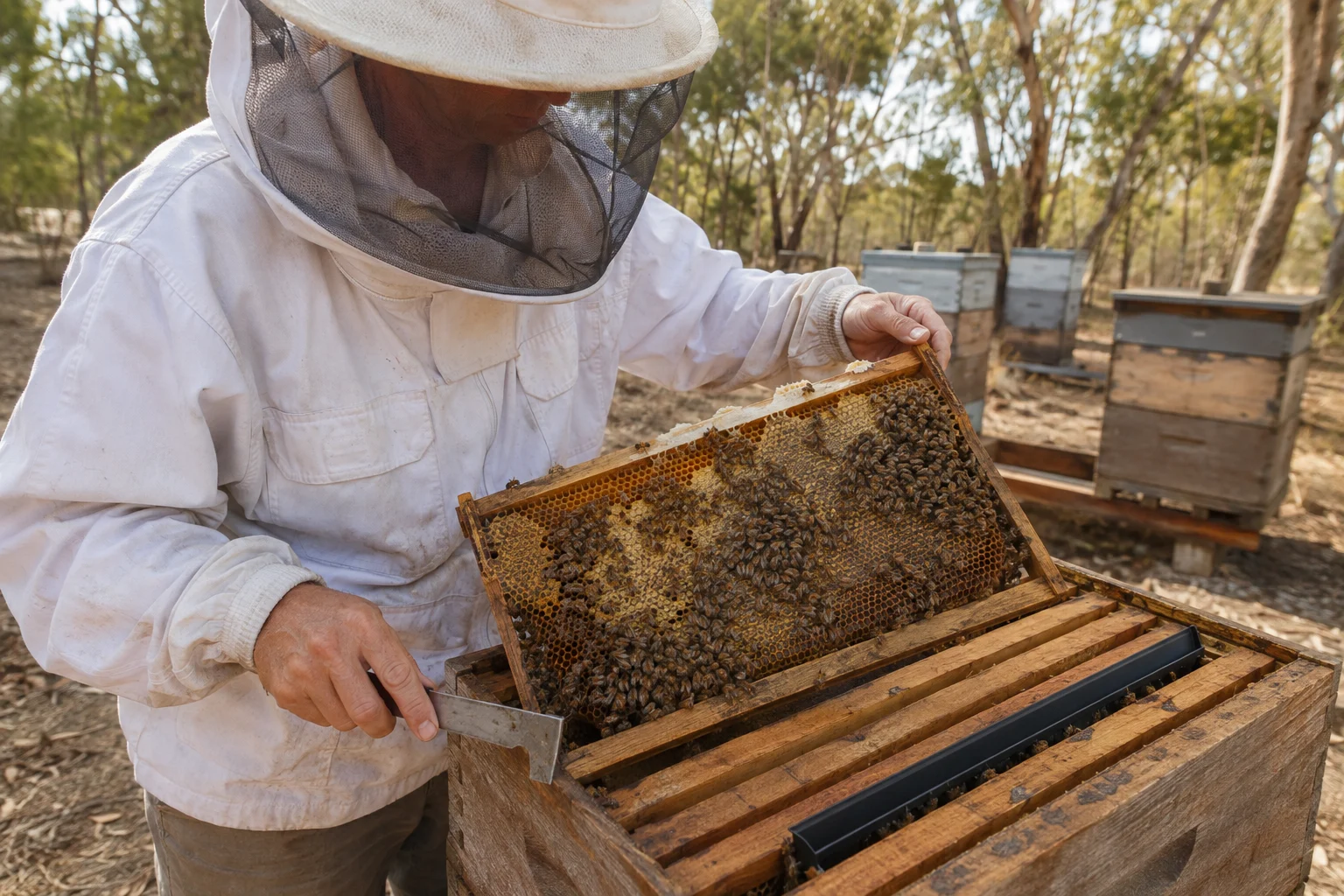
Healthy, well-populated hives are far better at corralling beetles and limiting egg laying. Good management practices significantly reduce SHB pressure:
- Avoid giving bees more space than they can defend
- Combine weak colonies where appropriate
- Ensure queens are productive and colonies are well fed
- Remove burr comb and excess debris from hives
- A strong colony will not eliminate SHB entirely, but it will slow their reproduction and reduce damage.
Hive Placement and Apiary Hygiene
Where and how hives are placed makes a difference:
- Position hives in full sun where possible
- Avoid damp, shaded ground
- Use stands to keep hives off soil
- Keep apiaries tidy and free from spilled honey or wax
- Beetle larvae leave the hive to pupate in soil, so dry, compact ground reduces survival rates.
Using Small Hive Beetle Traps Effectively
Traps are an essential part of SHB control in Australia and work best when used proactively, not just during outbreaks.
Key tips for trap use:
- Place traps where beetles naturally hide, such as on the bottom board or between frames
- Use approved trapping methods such as oil, diatomaceous earth, or commercial beetle traps
- Check and maintain traps regularly
- Replace trap contents as required
- Traps reduce beetle numbers and help interrupt the breeding cycle, especially when combined with strong hive management.
Bottom Board Control and the Killmore Bottom Board
Bottom board trapping is one of the most effective long-term strategies for managing Small Hive Beetle, particularly in Australian conditions where SHB pressure can be constant for much of the year.
The Killmore Bottom Board is designed to replace a standard bottom board and provide continuous SHB control without disturbing the brood nest. Beetles naturally move downward in the hive to escape bees, making the bottom board an ideal interception point.
Key benefits of the Killmore Bottom Board include:
- Full-length slide-out tray that allows easy monitoring and maintenance
- Designed for use with diatomaceous earth (Absorbicide), which desiccates beetles once they fall through the mesh
- Bees remain safely separated from the trapping medium
- Aluminium and steel construction, making it durable, hygienic, and long-lasting
- Particularly effective during warm, humid periods when SHB activity increases
Because the Killmore Board operates continuously, it helps reduce beetle numbers before populations build to damaging levels, rather than relying on reactive treatments after an infestation is visible.
Diatomaceous Earth and Bottom Board Traps
Diatomaceous earth (DE) is commonly used in bottom board traps to kill beetles that fall through the mesh.
Important considerations:
- Keep DE dry — moisture reduces effectiveness
- Ensure bees cannot access the DE directly
- Monitor traps more frequently during wet or humid periods
- Bottom board traps are especially valuable in late summer and autumn when SHB breeding accelerates.
When to Act
SHB control should be ongoing, but extra attention is needed:
- After heavy rain
- During nectar dearths
- When colonies are split
- In late summer and autumn
- Early intervention prevents population explosions that are much harder to manage later.
A Practical, Ongoing Approach
There is no single solution to Small Hive Beetle control. Successful Australian beekeepers use a layered approach:
- Strong, well-managed colonies
- Sensible hive configuration
- Good apiary hygiene
- Consistent use of traps such as bottom board systems
When these elements work together, SHB becomes manageable rather than catastrophic.
If you would like help selecting suitable SHB traps or hive management equipment for your conditions, speak with one of our friendly Penders Beekeeping Supplies staff who understand Australian beekeeping environments.
📞 Peter and Joan are always happy to help: (02) 4956 6166
🌐 View our Small Hive Beetle control products online at https://penders.net.au/product-category/pests-diseases/