InstantVap for Beginners: 8 Questions Australian Beekeepers Ask Before Their First Treatment
Varroa mite management is becoming an essential part of Australian beekeeping. Choosing a treatment involves more than buying a product: beekeepers need to understand mite monitoring, treatment timing, legal directions, safety requirements and how each option fits within an integrated pest management plan.
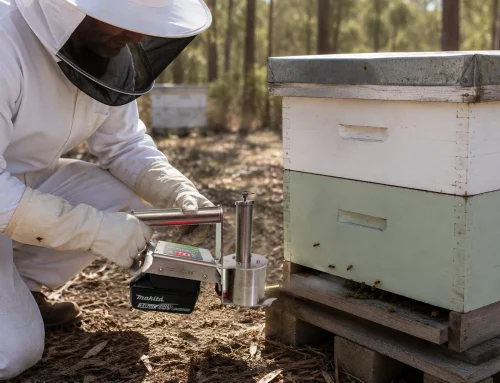
InstantVap devices are cordless, battery-powered vaporisers designed to heat oxalic acid dihydrate and deliver the resulting vapour into a hive. They can provide a practical treatment method, particularly when managing several colonies, but they do not replace regular monitoring or careful treatment planning.
The following eight questions will help Australian beekeepers understand what is required before undertaking their first InstantVap treatment.
1. Why Should You Include InstantVap in Your Varroa Treatment Plan?
An InstantVap gives beekeepers access to a cordless method of applying an approved oxalic acid treatment. It can help reduce disturbance to the colony and make treating multiple hives more efficient.
Oxalic acid should be used as one component of an integrated pest management plan rather than as a complete solution. With resistance to major synthetic miticide groups confirmed in several Australian states during 2026, monitoring results and rotating treatments with different modes of action have become increasingly important.
2. What Does an InstantVap Do?
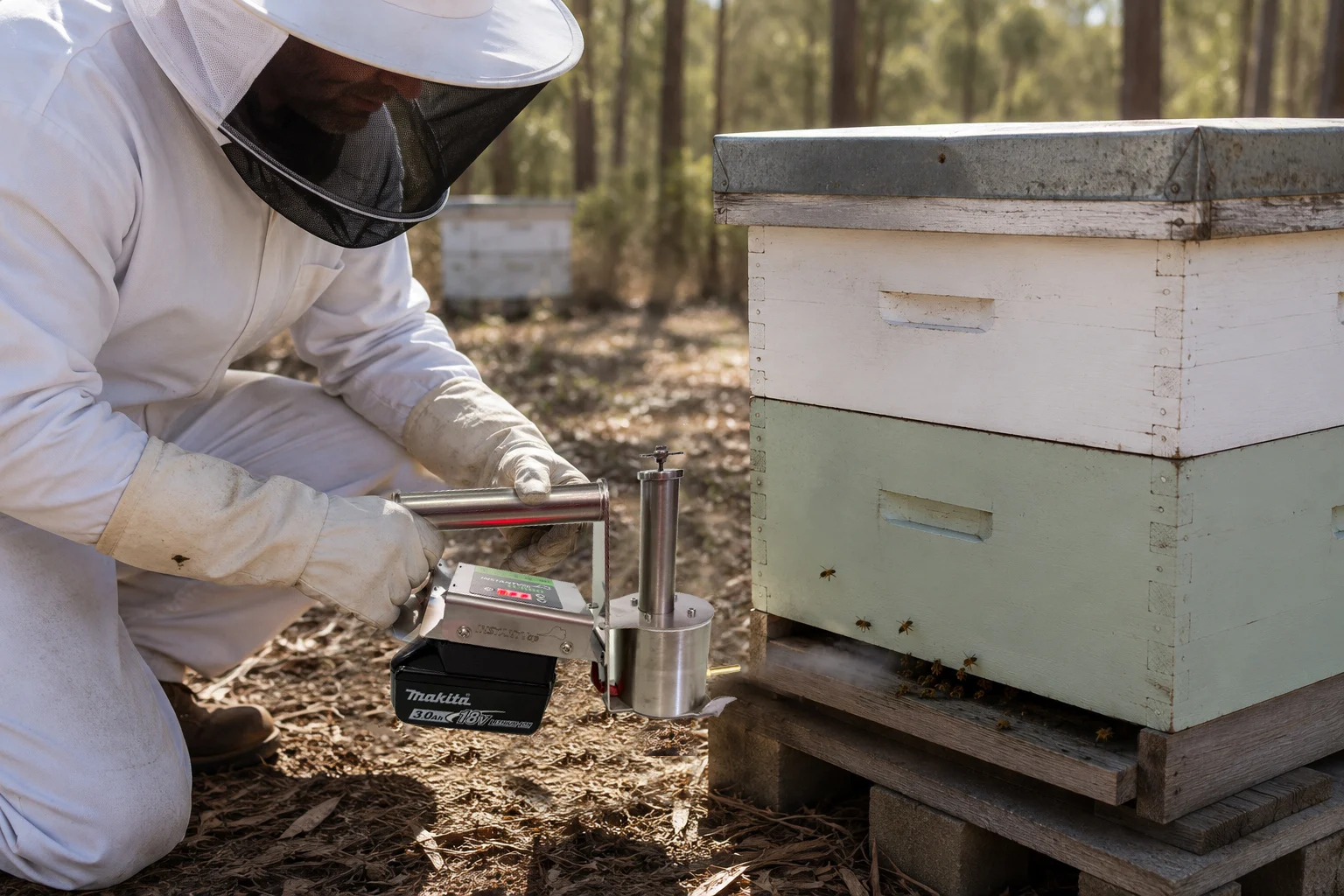
An InstantVap heats oxalic acid dihydrate until it vaporises. Inside a properly sealed hive, the vapour cools and deposits fine oxalic acid particles across the bees and internal hive surfaces.
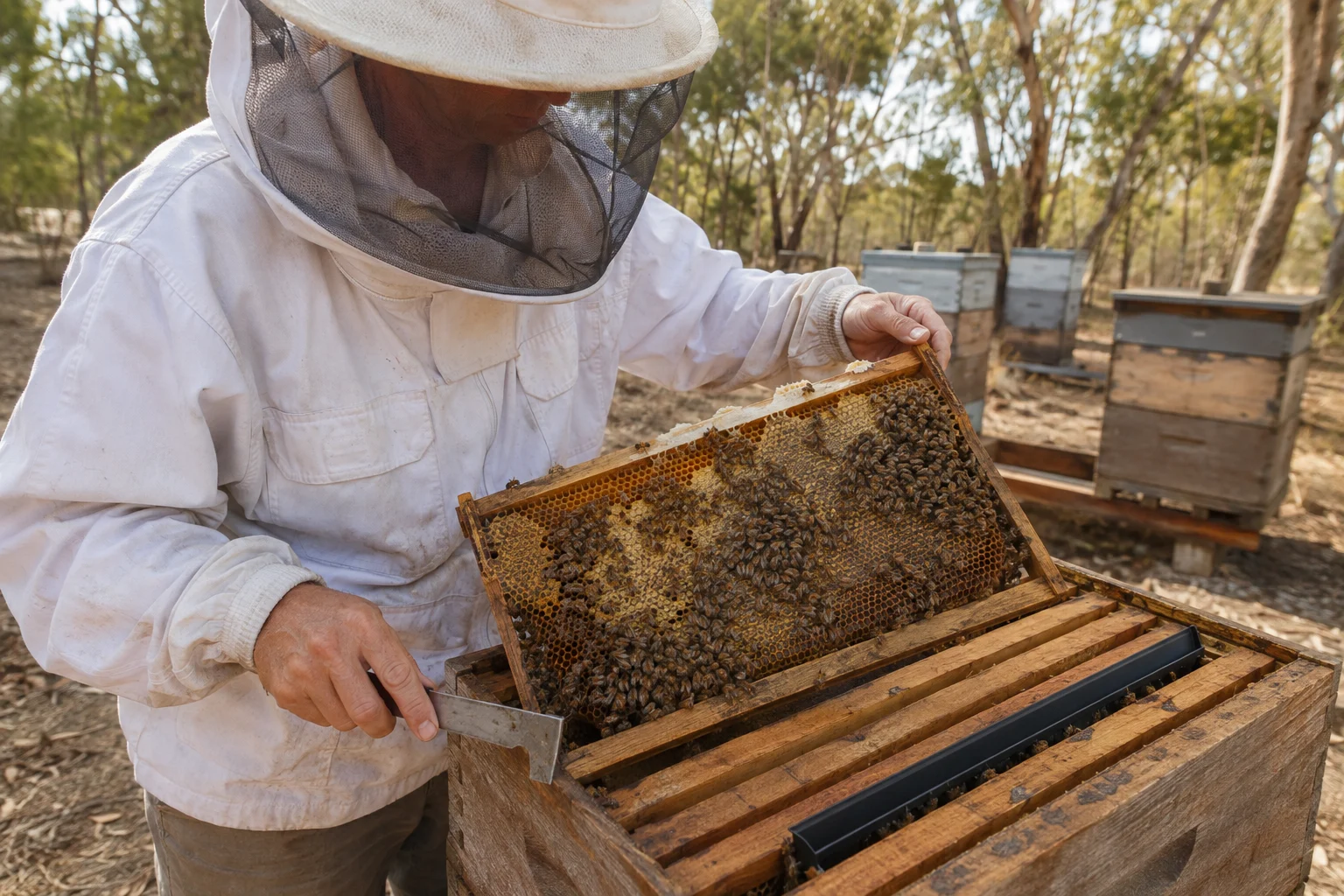
The treatment primarily affects mites living on adult bees. Oxalic acid does not penetrate wax cappings, so mites reproducing inside capped brood are protected from the treatment. This is why vaporisation is generally most effective when colonies have little or no capped brood.
InstantVap devices use an adjustable dispenser to deliver a measured quantity of powder. However, Australian beekeepers must set and use the device according to the dose authorised under the current Australian permit—not an overseas recommendation or the device’s maximum dispensing capacity.
3. Which InstantVap Model Is Right for My Apiary?
The appropriate model will generally depend on the number of colonies you manage, the battery platform you use and how quickly you need to move between hives.
InstantVap Lite
The manufacturer recommends the InstantVap Lite for hobby beekeepers managing up to approximately 20 colonies. It has lower power requirements and takes approximately 50–60 seconds to process a two-gram dose under the manufacturer’s stated test conditions.
InstantVap Compact
The Compact is designed for faster treatment and takes approximately 20–25 seconds for a two-gram dose under the manufacturer’s stated conditions. It has an adjustable dispenser and is suitable for beekeepers treating greater numbers of colonies.
InstantVap Turbo
The Turbo is the highest-output model, with the manufacturer stating a treatment time of approximately ten seconds for a two-gram dose. It requires a compatible battery with a minimum capacity of 4Ah.
These treatment times are manufacturer specifications based on a two-gram dose. The authorised Australian vaporisation dose is different, so actual treatment times may vary.
For many hobby beekeepers, the Lite may provide sufficient capacity. Beekeepers with larger apiaries may value the faster operation of the Compact or Turbo.
4. Which Oxalic Acid Product and Dose Can Australian Beekeepers Use?
Australian beekeepers must not use generic, industrial or unapproved oxalic acid products to treat their hives.
At the time of writing in July 2026, APVMA Permit PER94609 authorises Api-Bioxal Powder for vaporisation in:
- New South Wales
- Australian Capital Territory
- Victoria
- Queensland
- South Australia
The permit is currently in force from 11 November 2024 until 30 September 2028.
The authorised vaporisation dose is:
2.3 grams of Api-Bioxal Powder per beehive
The permit states that treatment should only occur when monitoring indicates that Varroa levels have reached or exceeded the relevant treatment threshold. Beekeepers must not estimate the dose, substitute another product or follow dosing instructions taken from overseas videos or forums.
The permit contains detailed conditions concerning treatment frequency and method. Always check the latest version immediately before use and seek guidance from your state agriculture authority where any direction is unclear.
5. What Battery Will I Need?
InstantVap models are manufactured with sockets designed for particular cordless-tool battery systems. Available configurations include several common platforms, such as Makita, DeWalt, Milwaukee, Bosch, AEG, Hikoki and Metabo.
Each InstantVap unit is generally compatible with only the battery socket selected when the unit is purchased. Batteries and chargers are not normally included.
Before travelling to your apiary:
- Confirm that the battery matches your InstantVap socket
- Fully charge the battery
- Check the minimum battery capacity specified for your model
- Carry a charged spare when treating several hives
- Inspect the battery and connection for damage
The InstantVap Compact manufacturer recommends an 18–20V battery with at least 4Ah capacity, while requirements may differ between models. Always follow the instructions supplied with your particular unit.
6. What Protective Equipment Is Required?
Oxalic acid powder and vapour can damage the eyes and skin and irritate the nose and throat. The vapour must not be inhaled.
For vaporisation, the current Australian permit requires:
- Cotton overalls fastened at the neck and wrists, or equivalent protective clothing
- Gauntlet-length chemical-resistant gloves
- Goggles
- A half-facepiece respirator with a combined particulate and acid-gas cartridge
The product must only be handled in a well-ventilated area. After treatment, users must thoroughly wash their hands, arms and face and clean their gloves, goggles, respirator and contaminated clothing.
An ordinary disposable dust mask is not sufficient. The respirator must fit properly, use the correct cartridges and be maintained according to its manufacturer’s directions.
The permit also restricts hive maintenance and honey harvesting for 48 hours after treatment unless the specified protective clothing, gloves and goggles are worn.
7. How Should I Prepare the Hive and Equipment?
Prepare all equipment before heating the InstantVap or opening the treatment product.
Your checklist should include:
- InstantVap unit
- Fully charged compatible battery
- Approved Api-Bioxal Powder
- Accurate dose setting
- Required protective equipment
- Suitable materials for sealing the hive
- Treatment and monitoring records
- Current APVMA permit
- InstantVap operating instructions
The current Australian permit directs beekeepers to seal the hive entrance and other ventilation points, including screened bottom boards, to prevent the escape of bees and vapour. The appliance must avoid contact with the frames, and the hive must remain closed for the specified period after application.
The Australian permit’s attached directions describe applying the vaporiser through the hive entrance, while some InstantVap manufacturer instructions describe using a dedicated access hole. Australian permit conditions override overseas labels or instructions where they differ. Do not choose an application method solely from an overseas demonstration; seek clarification from the relevant state authority or an experienced Australian supplier before treatment.
Never begin treatment until:
- Your respirator and protective equipment are correctly fitted
- The authorised dose has been confirmed
- The hive can be sealed correctly
- People and animals are clear of the area
- The device has reached its ready state
- You understand the complete treatment and shutdown procedure
Remember that the unit remains extremely hot after use and must be allowed to cool safely away from flammable materials. The battery should be removed before transporting the cooled unit.
8. When Is Treatment Most Effective—and How Will I Know It Worked?
Oxalic acid vaporisation is most effective when the amount of brood is absent or at its lowest level. Because oxalic acid does not penetrate wax cappings, treatment effectiveness may be noticeably reduced when substantial capped brood is present.
Treatment decisions should consider:
- Current mite-monitoring results
- The quantity of capped brood
- Seasonal colony conditions
- Previous treatments used
- Local treatment thresholds
- The possibility of reinfestation
- Whether treatment failure or resistance is suspected
Do not assume that the presence of visible vapour proves the treatment was successful.
Monitor mite levels again after treatment using an accepted method such as an alcohol wash, soapy-water wash or sugar shake. Results can vary between colonies, even within the same apiary, so monitoring multiple colonies provides a more reliable understanding of your mite levels.
Australian authorities recommend monitoring before, during and after miticide treatments, rotating chemical groups and seeking advice when treatment failure is suspected.
Education Is Essential to Successful Varroa Management
An InstantVap can provide Australian beekeepers with a practical and efficient way to apply an approved oxalic acid treatment. However, successful Varroa management depends on more than owning the equipment.
Before your first treatment, make sure you understand:
- Your colony’s current mite level
- Whether treatment is necessary
- The approved product and Australian dose
- The legal directions applying in your state or territory
- The influence of capped brood on treatment effectiveness
- The protective equipment required
- How you will monitor the result
- How the treatment fits within your broader Varroa management plan
For advice about selecting an InstantVap model, compatible battery socket, protective equipment or monitoring supplies, speak with the experienced team at Penders Beekeeping Supplies.
Important: This article provides general educational information current as at July 2026. Always follow the latest APVMA permit, Australian product directions, safety data sheet, InstantVap manual and relevant state or territory requirements before treatment.
See our range of InstantVap’s here